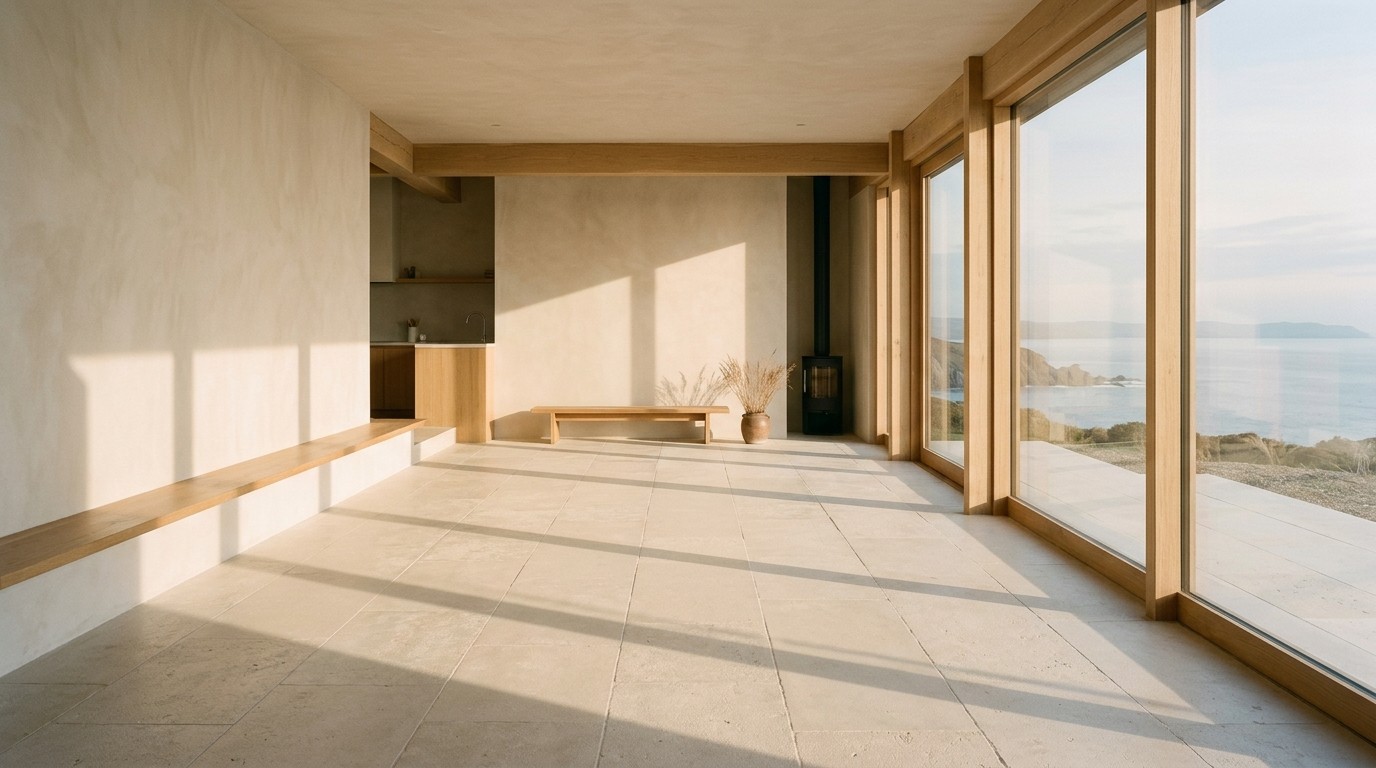
Before a single line is drawn, we spend time on site at dawn and at dusk. We watch where the first light lands, how it moves across the ground through the day, and where the last warmth settles in the evening.
Only then do we begin to place rooms. A kitchen meets the morning; a reading room holds the long afternoon; a terrace is angled to catch the final hour. The architecture becomes a quiet instrument for the sun.
It is slower than working from a floor plan alone. But a house designed around light feels inevitable once built — as though it could not have stood any other way.
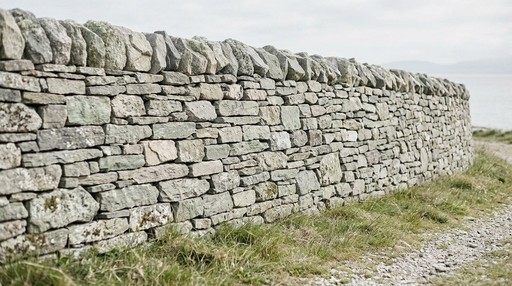
Why we build in stone
Stone is patient. On an exposed coast, that patience is everything.
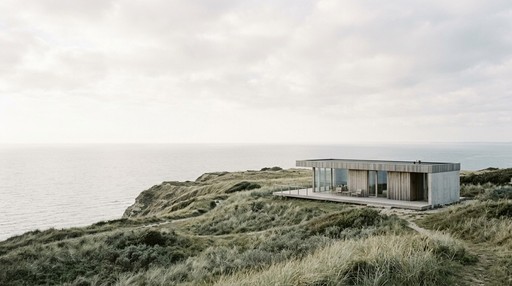
A house on the headland
What it means to build at the very edge of the land, where the view is also the weather.

The quiet discipline of light
Restraint, not spectacle: how a single well-placed opening can carry a whole room.